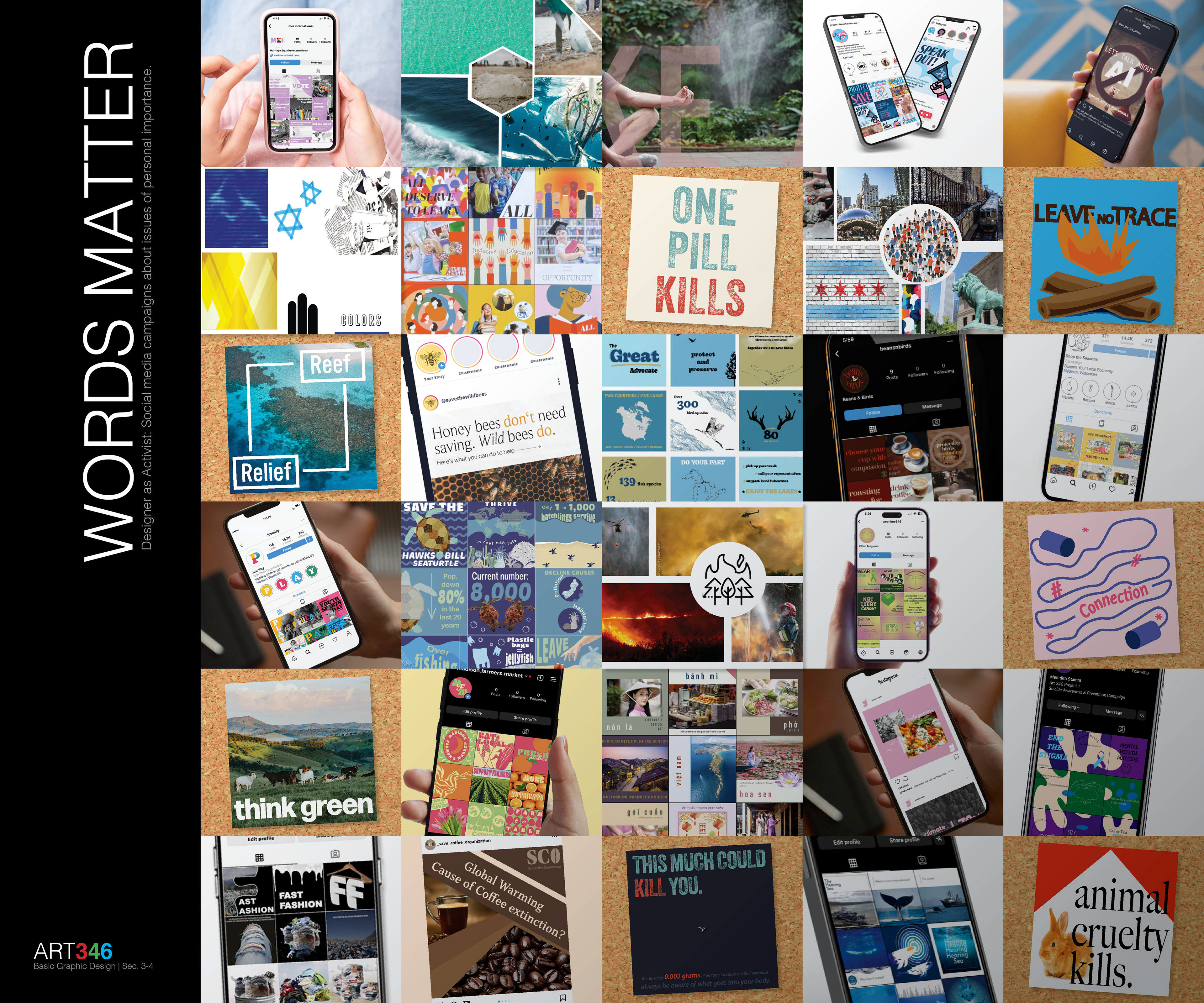
The Project Brief: "Words Matter"
This project centered on the power of typography as the primary vehicle for storytelling. Students were tasked with selecting a speech or text of significant cultural or personal weight and translating it into a kinetic typography video or a multi-page editorial layout.
Core Objectives:
Typographic Voice: Students had to determine how type choice, weight, scale, and motion could amplify the emotional resonance of the spoken word.
Narrative Pacing: Whether in print or motion, students needed to control the viewer's experience of time and emphasis.
Design Thinking: The project required deep research into the context of the chosen text, aligning with the pedagogical goal of "exercises that teach research, process, and problem-solving."
Pedagogical Alignment: Nurturing Individuality
Consistent with the philosophy that "traditional teaching risks homogenizing students’ work," this project encouraged diverse interpretations of the prompt. Students "explored their design styles and found their unique voices" by selecting content that resonated with their personal values.
The "Empathy & Awareness" Approach
Student: Matthew Hoerster
Concept: Dyslexia Awareness
Pedagogical Outcome: This student used the project to visualize a personal struggle, translating the experience of dyslexia into a chaotic, moving typographic landscape. The letters scramble, blur, and evade legibility, forcing the viewer to feel the frustration of the condition rather than just reading about it. This aligns perfectly with the goal of "making design choices that resonated with their interests and values."
The "Political & Social" Narrative
Student: Quinn Davies
Concept: Inaugural Poet Amanda Gorman
Pedagogical Outcome: Focusing on the poem "The Hill We Climb," this student utilized bold, high-contrast typography to match the strength and urgency of Gorman’s voice. The kinetic motion emphasizes keywords like "brave" and "light," transforming a static poem into a dynamic visual anthem. This demonstrates the student’s ability to "apply their skills in creating actual design materials" that carry cultural weight.
The "Historical & Cultural" Lens
Student: Ayodeji Okuleye
Concept: Martin Luther King Jr. Speech
Pedagogical Outcome: By working with a historically significant speech, the student had to balance reverence with modern design aesthetics. The use of stark black-and-white contrast and powerful, rhythmic motion highlights the cadence of Dr. King's delivery, proving that design can breathe new life into historical archives.
The Facilitator’s Role: From Teacher to Creative Director
In this project, the instructor’s role shifted from "passive information delivery" to "collaborative facilitator."
Guiding the Journey: Instead of dictating a specific animation style, the instructor helped students refine their storyboards and timing, ensuring their technical execution matched their conceptual ambition.
Tailored Feedback: Recognizing that a dyslexia simulation requires different feedback than a political speech, the instructor provided "constructive feedback... tailored to their individual needs," enhancing the quality of the final output.
Professional & Personal Impact
The "Words Matter" project illustrates the profound impact of connecting passion with pedagogy.
Active Engagement: Students were not just arranging letters; they were advocating for causes they cared about, resulting in work that was "engaged and enthusiastic."
Portfolio Readiness: The final deliverables—high-quality motion graphics and editorial layouts—serve as professional-grade portfolio pieces. They demonstrate to future employers that these students possess not just technical skills, but the ability to think critically and express complex ideas visually.
By integrating project-based learning with a focus on individual passion, this case study confirms that when students "make design choices that resonate with their interests," they become "better designers and individuals who are confident, creative, and passionate about the world."
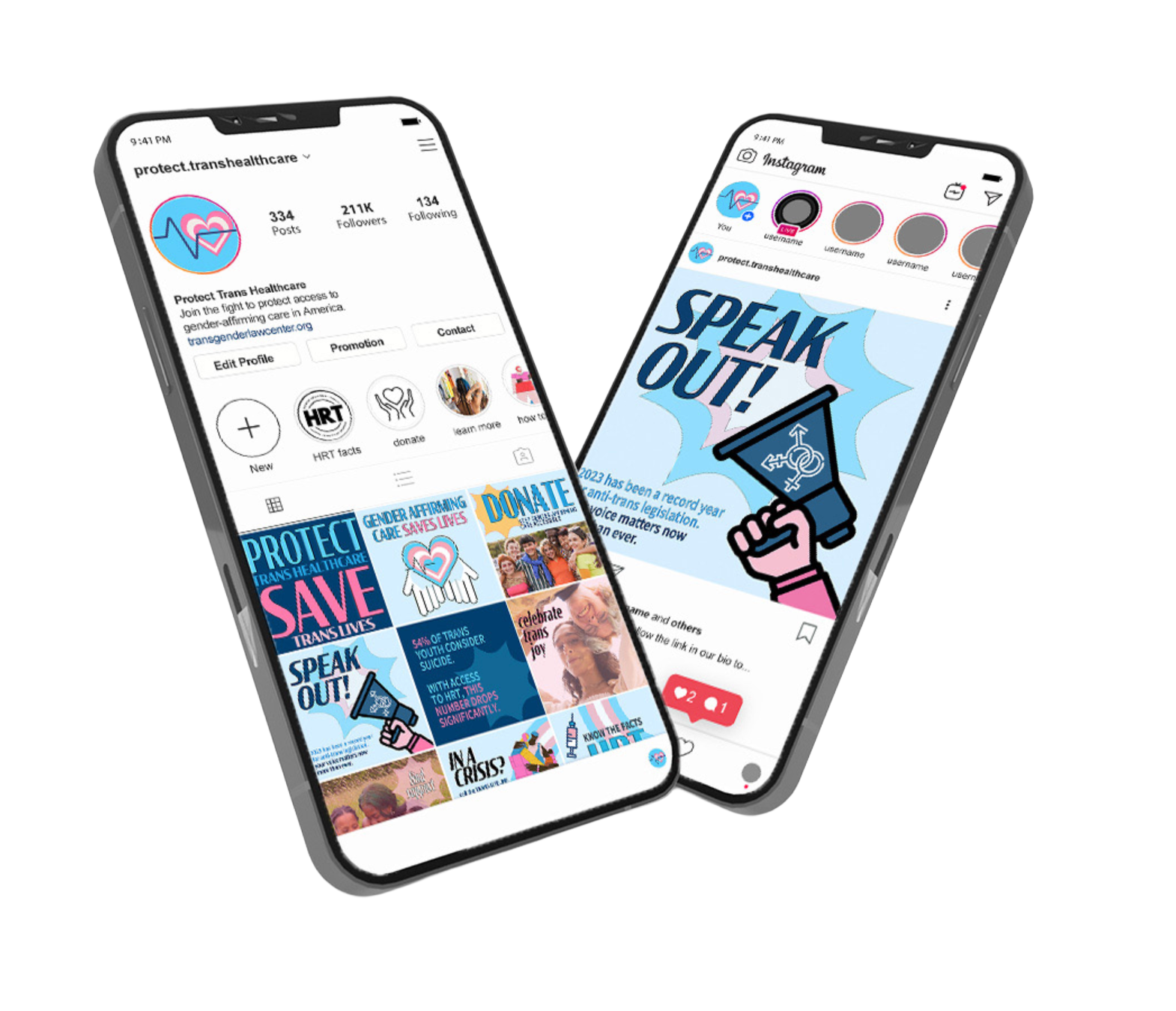
Assignment Brief
Social media campaigns communicate a civic action you are passionate about. Examples: "Save the Whales" or "Support Ukraine Now."
We will discuss the following essential elements of a Design Brief:
Category Review: Find examples of existing campaigns on your chosen subject. Share with the class what is and is not working in the examples. Use design language and vocabulary to discuss the design.
Target Audience Review: Who is the persona you are designing for?
Objective: What is your intended goal? Donations, volunteers, or awareness?
Project Scope and Timeline: listed below in "Deliverables."
Research: What is the topic or cause?
Deliverables:
Design one profile icon for an Instagram profile page. (320 x 320 px)
9 social media posts motivating your audience to take action on your chosen cause. (1080 x 1080 px)
At least one mockup on a mobile device
Dimensions: 1080 x 1080 pixels
Color: RGB. Choose a color palette of 5 or fewer.
Point, Line, and Plane (Shapes): Frame reference; touching; overlapping and cropping of forms; illusory space; contrast of elements in terms of size, direction, space, and position; and the dynamics of negative-positive relationships. The discoveries result from experimentation with the interrelationships of forms, a vital experience for designers developing a personal, formal style. Combining these principles can further expand a mere graphic vocabulary into a comprehensive, abstract graphic language, maximizing the possibilities for graphic expression.
Typography: Use phrases of five words or fewer. When working with typography, consider scale, position, color, context, and message. Think about repetition as a tool for emphasis. Is it a whisper small? Is it all caps? Draw on your perceptions and experience when making design decisions with type.
File format: .png or animated .gif
Social Media Channel: Instagram
Examples: Matter
Timeline:
This is a three-week project; each week, one phase of the project will be due on Sunday by midnight. The work-in-progress assignments will be submitted as discussion posts, enabling the class to collaborate, review one another's work, and provide feedback. The final assignment will be submitted for the Project 1 Assignment. The details of the final submission are outlined below.
Phase 1:
6/22 Typography search as a discussion post: Thinking with Type
Phase 2:
6/29 Moodboard: Examples of existing work found in the world, create a moodboard as a discussion post.
6/29 Work in progress (WIP) as a discussion post. Where are you at? What is working? What would you like feedback or suggestions on?
Phase 3:
7/6 Create mock-ups for the presentation, which will be included in the final assignment submission.
7/6 Final concepts due to Canvas assignment submission (See below)
7/6 Present your campaign to the class as a discussion post. Record your screen, with your camera on. Talk about the who, what, when, where, why, and how of the topic you have chosen. End with a call to action, something each of us can do today to further the initiative.
Submit:
One PDF containing:
Cover page: Name, Class, Date
Profile icon for the Instagram account
9 Instagram posts, 1 per page
At least one mockup
Start with the Research Discussion Post
Group workshop, online discussion post for the following question:
What causes are we passionate about?
What causes are we passionate about?
Inspiration: